

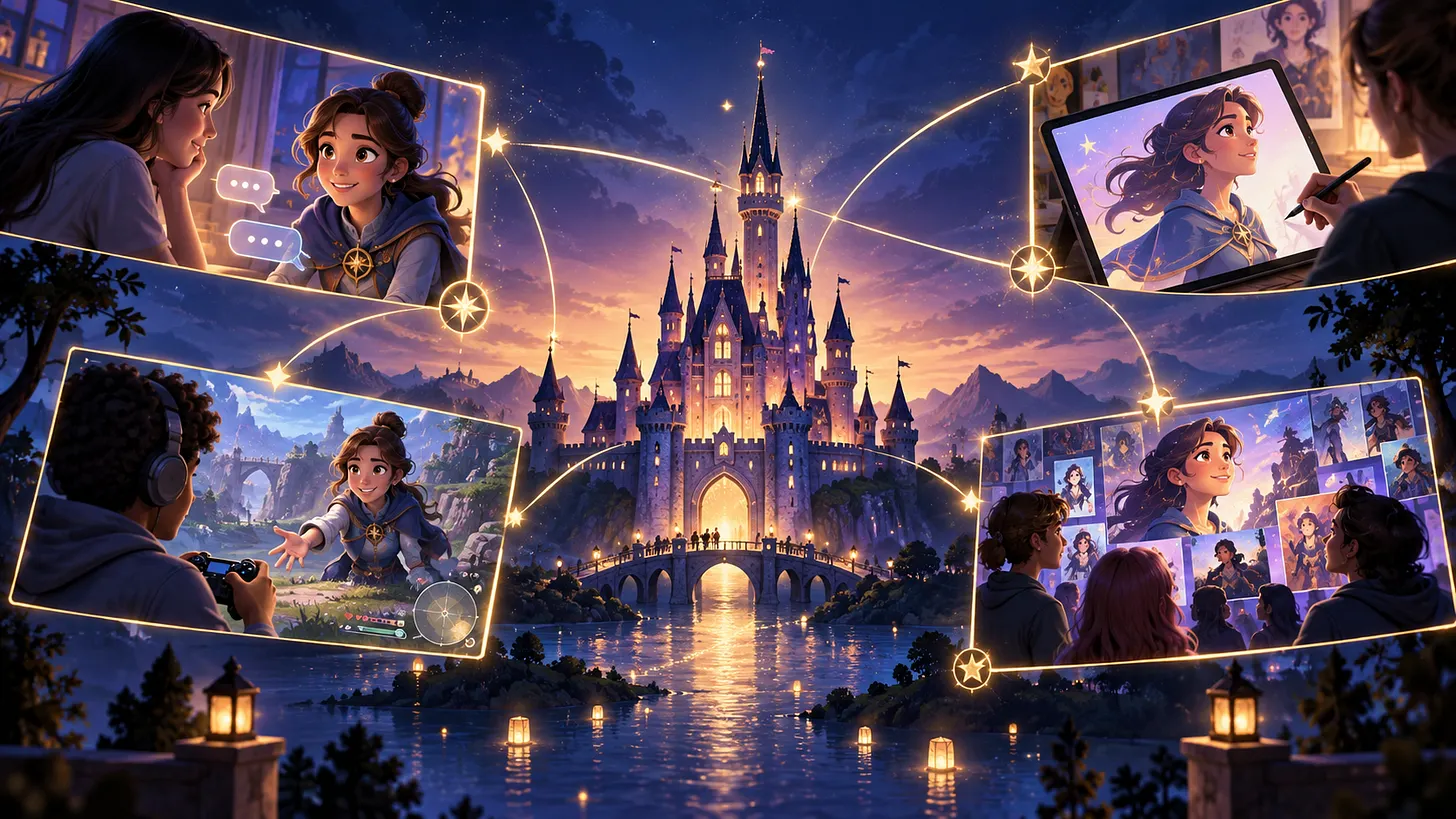
Disney spent the early years of the generative AI boom trying to keep unauthorized versions of its characters off new platforms. Now, it is bringing one of those platforms’ senior operators inside its castle walls. Karandeep Anand, CEO of Character.AI — a platform where users create and chat with AI personas — will become Disney’s first company-wide chief technology officer, with responsibility for product, engineering, data, and AI platforms. Other members of Character.AI’s technical team are expected to join him.
Similar moves across entertainment, from miHoYo to Hasbro, suggest that IP holders are exploring ways to leverage AI-driven fan interactions and consumer experiences. What do these new ecosystems look like for IPs in and outside gaming? How do they tie back to lasting engagement and eventual monetization? And what is needed to enable these AI-enabled fandoms? Let’s unpack.
From Regulating to Embracing IP-Based AI Tools
It is not surprising to see Disney embrace new technologies, having hired a senior executive to lead its metaverse activities back when interest in this theme was peaking. What’s striking is the scope given to a CTO-type function, and the sharp turn from Disney’s position only a year ago, when the company demanded that Character.AI remove unauthorized bots based on Disney characters.
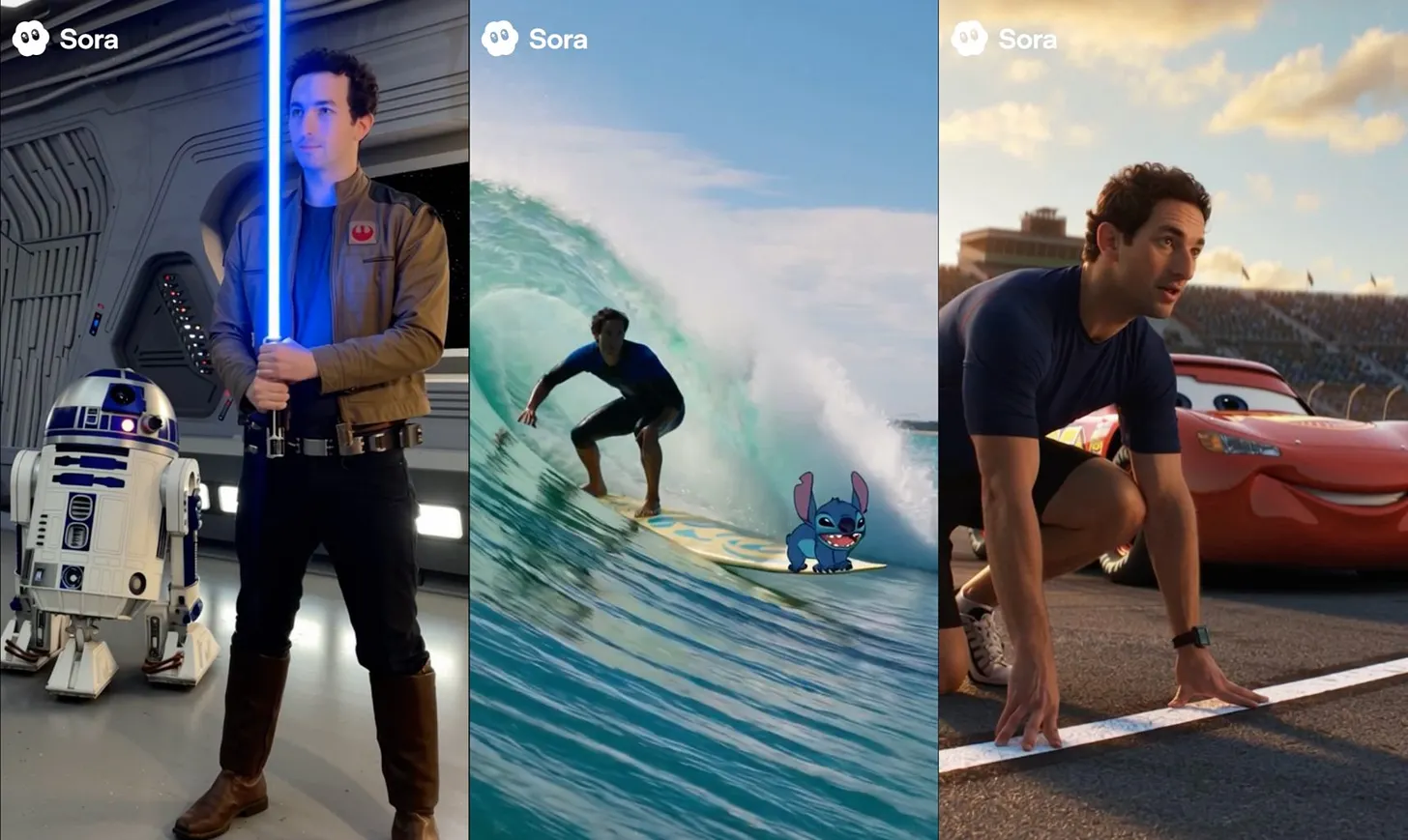
Disney hasn’t disclosed a product roadmap, but its proposed three-year arrangement with OpenAI offered an early glimpse of what these initiatives could look like. Announced in December 2025, the deal would have allowed users to create images and short videos in Sora using more than 200 characters across Disney, Marvel, Pixar, and Star Wars. Talent likenesses and voices would have remained outside the license, while select Sora videos could have appeared on Disney+. OpenAI then closed Sora’s web and app experiences on April 26, 2026, followed by the API on September 24. The deal will not proceed as planned, but it — alongside Disney’s announced $1B OpenAI investment — offers a useful look at the boundaries Disney wanted around approved assets, distribution, and human performance.
Disney’s approach points toward continued enforcement of its rights alongside official systems to govern how its characters look, speak, and behave. Shaping these AI-driven fan interactions through partners or properties like Disney+ could help Disney retain control of its brand, expand how fans engage with its universe, and build more direct relationships with them.
In gaming, miHoYo has approached AI through a mix of proprietary experimentation and tighter rights enforcement. A Shanghai court ordered an AI service provider to pay miHoYo RMB 750,000 ($112,000) after it reproduced and sold voice packs linked to 63 Genshin Impact characters.
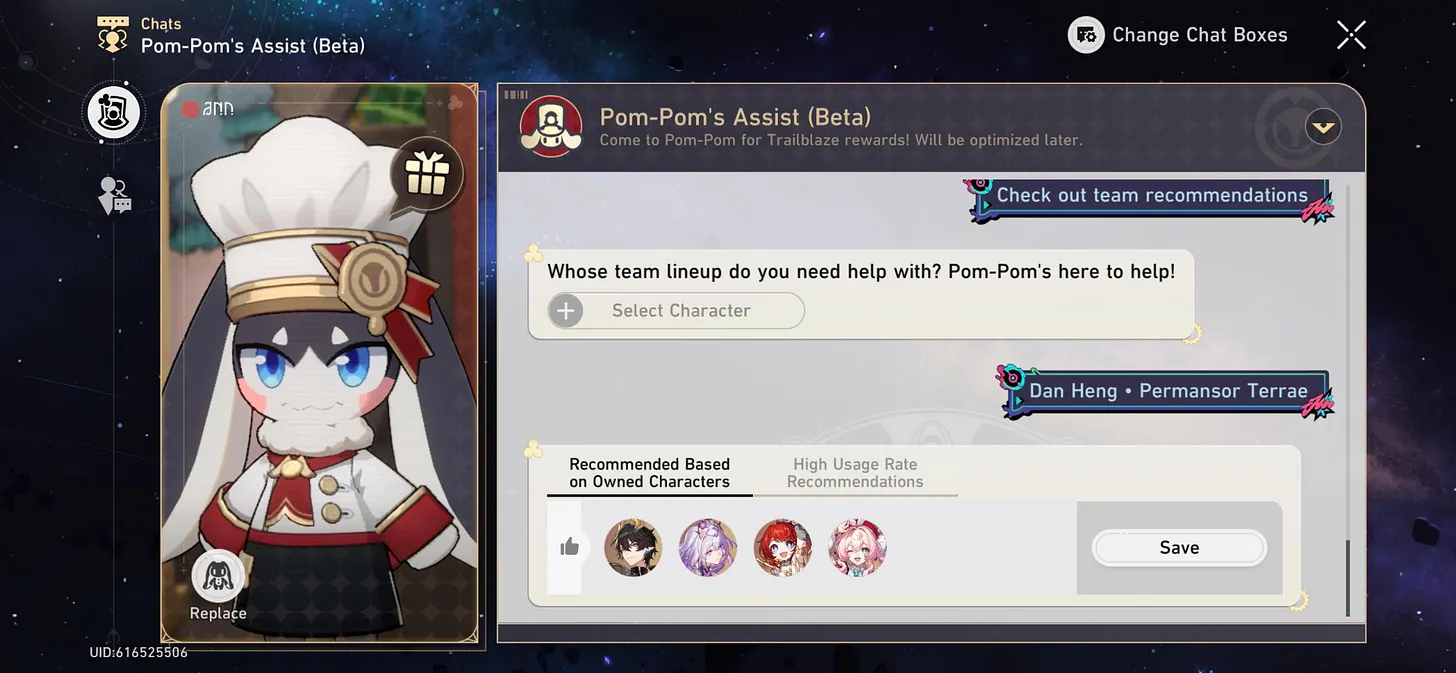
In parallel, co-founder Liu Wei announced a significant AI commitment with an investment ceiling of RMB 100B ($14.7B) over three years and said the technology could generate more experiences in real time. HoYoverse tested that consumer-facing idea more directly with Pom-Pom’s Assist. The in-game assistant delivered character-progression recommendations in Honkai: Star Rail as Pom-Pom, the Astral Express conductor. An authorized character experience becomes more valuable when miHoYo can separate licensed voices and behavior from imitations, giving fans an official alternative in a community they already use. Clearly, leveraging AI to create more consumer touchpoints doesn’t mean giving up control.
Similarly, Hasbro and WildBrain are building tighter controls around character behavior for partners. Hasbro’s Sixth Wall studio calls its offer Behavioral Licensing; developers and licensees can seek character rights alongside systems that govern how a character thinks, speaks, and interacts on outside platforms. WildBrain, in contrast, acquired Personality AI and brought its kid-safe conversational-character team, which developed work for Amazon Kids+, in-house.

Hasbro is seeking partner pilots for a combined rights-and-capability offer, while WildBrain bought the team needed to deliver the experiences itself. Neither has disclosed the economics, but both are moving beyond simple “get permission for character licensing” and toward separately licensing and managing the characters’ actual behaviors.

Controlling Fan Engagement Channels
Gaming companies have long invested in proprietary channels, recognizing that fandom is active, not purely passive, with examples ranging from HoYoLAB’s extensive player infrastructure to Games2Gether’s player feedback and engagement platform. AI now opens new ways to turn these channels from one-way broadcasts into two-way interactions.
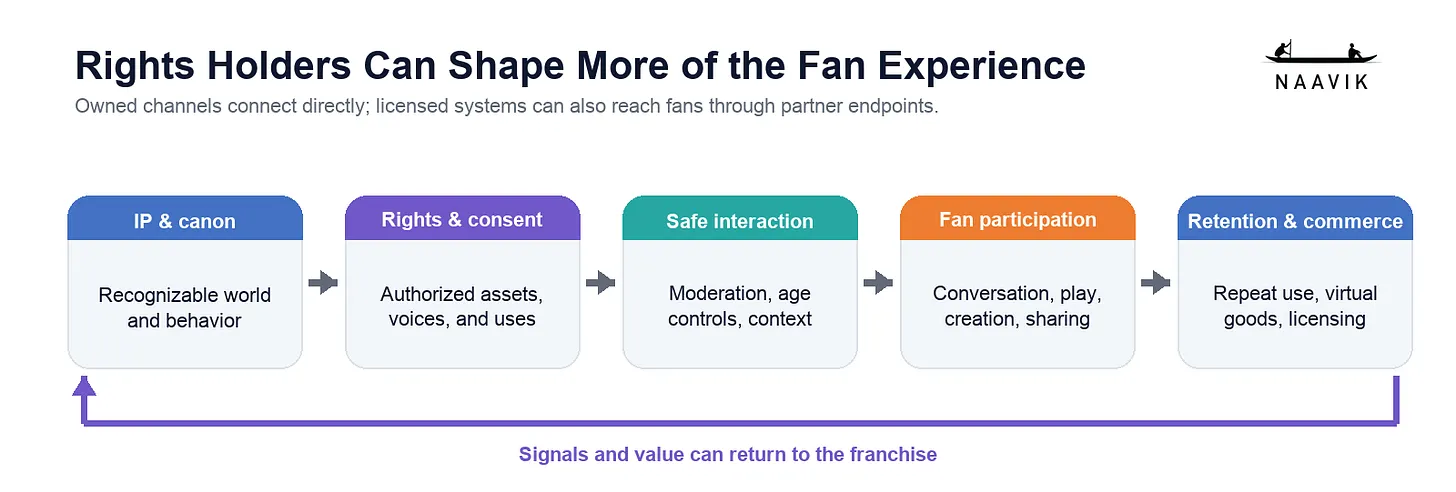
Fans don’t just receive a company’s stories and experiences; they build identities, relationships, communities, and creative work around them. Responsive characters can deepen that relationship by remembering preferences, answering in voice, reacting to fan art, and carrying interactions across games, community apps, streams, and physical products. A rights holder operating that layer can connect interactions to authenticated accounts, approved lore, moderation, and commerce. Even when a partner controls discovery, billing, and the consumer endpoint, supplying the underlying capability gives the IP owner influence over the character experience.
Fortnite has already shown how that relationship can work inside a game. In May 2025, Battle Royale squads could recruit Darth Vader and talk to him. Google’s Gemini generated the dialogue, ElevenLabs produced the voice, and James Earl Jones’s estate approved use of his performance. The experiment put an authorized, responsive Disney character inside a third-party game. It also sits within a larger relationship: Disney invested $1.5B in Epic Games and is building a persistent games-and-entertainment universe connected to Fortnite where fans can play, create, watch, and shop.

The short-lived Sora plan showed how Disney hoped to bring creation back into an owned channel. CFO Hugh Johnston described AI-assisted production and streaming personalization as revenue or cost opportunities and, as noted above, said Disney+ could incorporate short-form Sora videos to increase hours watched. Sora’s closure ended that specific path before it could be proven, but the underlying commercial idea — using personalized fan creations to extend engagement and point people toward subscriptions, advertising, merchandise, parks, and other franchise products — remains relevant to whatever Disney tries next.
In contrast, HoYoverse owns the end-to-end fandom infrastructure and is now infusing it with AI. HoYoLAB, its companion app and website for player accounts, guides, events, fan art, and live-ops updates, sits alongside its games in a unified first-party ecosystem. Future character assistants could use game context and community activity to make responses more relevant, while pointing players back toward events and content. General-purpose platforms may offer more reach, but an owned service can tie canon, product context, community activity, and commerce together more directly. Licensing lets a character travel farther; first-party distribution and management allow deeper integration. Both routes let a rights holder shape more of the fan experience than a conventional likeness license would.
The Role of IP in a Post-AI Environment
Character.ai has already demonstrated the chatbot business model through 20M MAUs and over $30M ARR. China has also seen a surge in chatbot engagement, especially companion and AI boyfriend apps that have reached tens of millions of daily users. But adjacent successes, such as Love and Deepspace, make the commercial model easier to see by showing how readily players will pay for closeness to fictional characters.

The otome mobile game combines a 3D first-person romance story with action combat and other interactions with several love interests. Its gacha system sells chances to obtain Memories, collectible cards that can strengthen a combat team and unlock character-specific stories, voice messages, and intimate scenes. Limited Memories give players a reason to spend repeatedly on a specific character and deepen a relationship the game sustains between events. The game also implemented light character interaction features based on voice recognition. More responsive AI systems could make those moments less fixed and more personal. Experiences like ByteDance’s Maoxiang have experimented with AI role-playing, quickly reaching over 8M MAUs.
Closer relationships also give companies more ways to hurt their users, making safety critical. China’s rules for anthropomorphic AI require services in China to address dependency, minors, interaction data, prolonged use, and even the way a service shuts down. Character.AI announced that it would remove open-ended chat for users under 18 after deciding that additional safeguards were inadequate for the format. Age assurance, escalation paths, consented performance, and graceful termination become part of the product. But safety decisions can also impair the core experience if too rigid. Memes, fan fiction, role-play, and collaborative lore thrive because fans bend a world in directions its owner never planned. An accurate, tightly governed bot may still be culturally inert if every response protects the brand and leaves nothing to reinterpret. A company can own the interface and still fail to create a place where fandom grows.
Fans also need a way to recognize the official, authorized versions. C2PA Content Credentials can attach signed, tamper-evident information about how a media asset was created or changed, helping an official pipeline distinguish its output from a copy. That provenance says nothing about whether a scene fits canon, a performer consented to every use, or an interaction is safe, so technical authentication has to sit alongside the creative judgment that keeps a character behaving like itself.
The rise of prolific synthetic media underscores this dynamic: as generating character-like content becomes cheaper and easier, established IP grows increasingly valuable. Decades of storytelling, distinctive vocal performances recorded with consent, and fan communities are scarcer and more complex to replicate than generated text or an AI-rendered image. Even with ongoing advances in AI modeling, authentic character performances backed by genuine brand equity remain uniquely resilient, offering media owners a formidable moat to protect.
The strongest approach balances official interactions with creative fan expression. IP owners can provide canonical lore, authorized voice assets, safety guidelines, and validation that independent platforms cannot. Fans can then build on those frameworks, share content, and determine which experiences offer genuine value. Reliable guardrails that acknowledge fan contributions, rather than trying to control every creative detail, can help fandom thrive.
Future Outlook
Rights holders are beginning to test three broad product paths:
- Official companions that can talk, play, teach, or accompany a fan across devices.
- Personalized narratives that can change scenes, pacing, or side stories within authored limits.
- Governed AI-assisted UGC that lets fans create with licensed assets, then publish, remix, or earn recognition inside an official ecosystem.
Disney, miHoYo, Hasbro, WildBrain, and others are placing different bets across these categories. None has yet shown which approach keeps users most engaged after the novelty fades. Each path relies on a similar set of foundational controls. Rights and performer consent define the permitted material, canon rules and approved knowledge constrain what a character knows, moderation and age controls shape what it may say, and provenance records where an output came from.
A sustainable service has to work for fans, make economic sense, and remain governable. From a business perspective, repeat sessions and healthy creator participation would indicate lasting demand. Revenue driven by licensing or conversion into adjacent products would need to exceed model and moderation costs. Safety failures would also need to remain manageable, while continued human-led community activity would indicate that growth didn’t come at the expense of fan trust. If the right balance is struck, this could become a major new way for fans to engage with their favorite franchises.
While AI can make brand attachment interactive, fandom still begins with characters, stories, and worlds that people choose to care about. Disney’s reversal, alongside moves by miHoYo, Hasbro, and WildBrain, shows that major rights holders are taking a more active role in shaping how their IP is used in AI. The years ahead should bring more first-party and licensed experiences that give fans new agency to interact with the characters they love — in games and beyond.
Sponsor: Create next generation game experiences with AWS

AWS for Games gives you everything you need to build, run, and grow innovative games. Many studios rely on AWS’ 16 years of games experience to run the biggest games including Fortnite, Roblox, and Apex Legends. You might be familiar with Amazon GameLift Servers for game server hosting or AWS solutions for game backend, analytics, playtesting, live-ops, and more. Now, AWS is applying that industry expertise to AI, leading with serverless, easy-to-operate solutions across the game lifecycle.
On AWS, you can use and customize generative AI models, privately and securely, alongside your existing AWS cloud infrastructure and data. Amazon Bedrock is the one-stop service for governed model access, guardrails, fine-tuning, and agent deployment within any workflow. The Games industry team at AWS offers ready solutions that use Bedrock to solve game production and operations needs.
One way to build on AWS is using Kiro, Amazon’s agentic IDE that combines the flexibility and control of a visual IDE with spec-driven development and agentic integration with game engines, bug tracking, and cloud infra to speed up development.
The AWS for Games team can demonstrate how these services have been applied to games already, do get in touch!
Top News Items
Odyssey Unveils World Models That Can Drive Cars, Control Robots, and Play Video Games
- Odyssey, the creator of interactive “world models” for a variety of AI sectors, released two major updates this month. Odyssey-3 is a foundation world model, an autoregressive diffusion transformer trained on massive visual data that has developed an understanding of physics, dynamics, and cause-and-effect. What makes it notable is its generality: the same model can control robot arms, drive vehicles in closed-loop simulation, pilot drones, and play video games like GTA V, with early evidence of learned behaviors transferring between games without additional training. Separately, Agora-2 is a multi-agent world model that lets up to 20 humans and AI agents share a single generated environment in real time, demonstrated through a playable Diablo II research preview. The company describes Agora-2 as a “learned game engine” where participants’ actions influence a shared simulation.
- Odyssey-3’s ability to transfer a mobility policy trained on two hours of GTA V footage to produce horseback movement in Red Dead Redemption 2 is an early proof point for world models as a foundational layer beneath game AI. If these models mature, they could provide NPCs and game systems with a more robust understanding of physical cause-and-effect rather than hardcoded animation trees and scripted behaviors. The shared simulation architecture in Agora-2 also points toward a future where game worlds could be generated and populated by agents that learn from each other, not just from developer-authored rules. These are still research-grade systems, not production tools, but the world model trajectory from “simulate physics in a lab” to “play actual commercial games” is moving quickly.
Meta Announces Horizon Create and Horizon Studio for AI-Powered Game Building
- At Meta Connect 2026, Meta announced Horizon Create and Horizon Studio, two tools that let users generate 2D and 3D games from text prompts. Horizon Create is a standalone mobile app where users describe a game idea, and the AI builds a playable version with art, progression systems, difficulty balancing, and multiplayer support. Horizon Studio offers a browser-based workspace with more granular controls for scene editing, asset swapping, and scripting. Both tools are in early access via a waitlist. The hook for developers is distribution, as games made with these tools become eligible for native recommendation across Facebook, Instagram, and Horizon, letting players tap into a game from a social feed without installing anything.
- This distribution angle – instant access to billions of existing social media users, zero-friction entry from a feed, and no separate app install required — separates Meta from the growing field of prompt-to-game tools. If the generated games are engaging enough to retain players, this could create a lightweight casual gaming layer across Meta’s entire social ecosystem, essentially reviving the Facebook gaming era with AI-generated content instead of Zynga titles. Monetization terms for creators are still unspecified, which will be the real test of whether this could become a sustainable creator economy or just a flashy demo.
Tokyo Game Show 2026 Showed Growing Adoption of AI in Japanese Game Dev
- Tokyo Game Show 2026, marking its 30th anniversary, set records with 1,138 exhibitors from 53 countries – and an AI technology pavilion displaced the indie showcase from the main exhibition hall. A preliminary CESA report found that 85.8% of Japanese game developers now use generative AI tools, up from 51% just one year ago. Level-5 CEO Akihiro Hino issued a public apology after the studio’s showcase drew backlash for using AI-generated imagery, including an AI-generated version of Hino himself, in trailers for Yokai Watch and Professor Layton titles.
- AI adoption jumping from 51% to 86% in a single year shows the Japanese industry is integrating these tools at speed, but the audience reaction to Level-5 suggests that consumers will punish visible shortcuts in marketing and presentation even as they accept invisible ones in production pipelines. The lesson is not “don’t use AI” but “understand where your audience will tolerate it.” Internal tooling for concept iteration, QA, and localization is fine. The vast majority of the increased Japanese adoption is coming from the internal side, especially around analytics, helping to insulate most reputational issues for now. But we expect adoption in Japan (and elsewhere) will persist and rise in the years to come.
Meshy Details Mora Architecture for AI-Generated Worlds and Launches Meshy 7.1
- Meshy, the AI-powered 3D generation platform backed by nearly $400M in Series B funding at a $1.5B valuation, unveiled Mora (Multimodal Open-world Real-time Architecture), a research framework for generating complete, interactive game worlds in real time. Unlike approaches that ask a single video model to simulate an entire world end to end, Mora uses a layered architecture: coding agents handle game logic and mechanics, Meshy’s 3D generation builds spatial structure and assets, and a real-time video model renders the final imagery and audio. Playable research demos are live at mora.fun. Separately, Meshy launched Meshy 7.1, which generates 3D geometry at up to 4096-cubed voxel resolution (up to 80 million triangles), making it the first generative 3D model to reach that level of geometric detail.
- Mora’s layered approach is a meaningful architectural bet. Many AI world-generation attempts rely on video models that struggle with spatial consistency and complex interactions because they are trying to do everything at once. By separating logic, structure, and rendering, Mora lets each layer improve independently, which means advances in any one area (better coding agents, richer 3D models, faster video rendering) compound inside the system. If the architecture proves viable beyond research demos, it could offer game developers a modular pipeline where AI generates playable world scaffolding that humans then refine.
Minecraft Education Replaces Hour of Code with Hour of AI
- Minecraft Education, in partnership with Microsoft and Code.org, has replaced its long-running “Hour of Code” initiative with a new “Hour of AI” program. The flagship experience, “Hour of AI: The First Night,” puts students inside a Minecraft survival scenario where they program an AI agent using block-based MakeCode or Python. The agent learns to classify resources, recognize patterns, and automate tasks like crafting tools and building shelter. Students act as the “human in the loop,” verifying the agent’s work and correcting its mistakes. The program builds on over 300M cumulative “Hour of Code” sessions over the past decade and is available for free in 29 languages.
- The rebrand from “Code” to “AI” reflects a shift in what some in the industry considers baseline digital literacy. If the next generation of players grows up understanding how AI systems learn, make decisions, and fail, they will have fundamentally different expectations for in-game AI. Games that rely on visibly scripted NPC behavior will feel dated to an audience that trained an AI agent in Minecraft at age ten. More practically, this pipeline also feeds the future workforce. Studios struggling to hire AI-literate designers and engineers stand to benefit as these programs normalize AI concepts early. Microsoft is clearly betting that AI literacy is the new coding literacy, and Minecraft’s reach gives that bet enormous scale.
Other News Items
- Unity released an official plugin for Codex
- Why Roblox wants developers on its platform to be able to ‘distribute everywhere’
- Savvy Games Group signs new MoUs with Gosu Academy and Warpzone AI Labs
- ThinkingAI launches Agentic Engine, AI agents that run growth on a company’s own infrastructure
- Fulcra Brings Universal Multiplayer to Any Agents You Choose
- Jest hits $1M run rate in 3 months as text-powered app store takes off
- MiHoYo awarded $112,000 by Chinese court after AI voice service dupes Genshin Impact characters
- Flam raises $40M to build AI models for interactive AI videos
- Disney’s first CTO led an AI startup it once accused of copying its characters
- What AWS’s chief AI and technology officer told employees about the future of AI
- European game developers are more concerned that AI will pressure them to work faster rather than take their job
- Nvidia wants to turn your house of gaming PCs into an AI supercomputer
- Skild AI teaches S1 robot to play soccer
- Twitch CEO Dan Clancy says platform doesn’t need AI disclosure rules — for now
- Snap is launching a new Specs AI tool, and it’s coming to iOS and Mac
Partner Spotlight: TRUE CREATIVE: Where Playable Concepts Come From

Playable production is slow and expensive; teams keep running the same few builds and approving safe ideas, and nobody can explain exactly why a winner worked.
TRUE CREATIVE shows how Sett approaches the process behind the next idea. Its agents analyze the game and the team’s brand rules, study competitors, track trends, and connect past campaign performance to player behavior inside each playable. They use that evidence to develop hypotheses for new creatives.
Sett experts challenge the ideas and decide what moves forward, with the team involved as much as it wants. Each concept comes with a hypothesis, supporting evidence, and a full creative brief.
Approved concepts become playable builds, with variations in gameplay, level design, and visual direction, delivered in Slack, ready to deploy.
Content Worth Consuming
Owlchemy taps Artificial Agency for agentic AI characters in Dimensional Double Shift XR game (Gamesbeat): “This is the world’s first commercial game mode built around moment-to-moment collaboration between one human player and multiple AI agents that interpret player intent, coordinate with one another, and adapt as the game unfolds. Artificial Agency’s technology and game-specific models provide the behavioral layer for these interactions and decisions, bringing Owlchemy Labs’ creative vision and gameplay design to life.”
Artificial Intelligence and Market Entrant Game Developers (ACM DL): “We found that the prevalent purpose is to generate image followed by music, voice, and code for both indie and non-indie developers, while the distributions are not statistically same. Indie developers use AI more for music and code than non-indie developers. Motivated indie developers might use AI to learn programming quickly and generate elements to realize their ideas.”
You can make games even without knowing coding?, Part 2, Part 3 (InvenGlobal): “I added the necessary features one by one. I added units, added Monsters, tried adding BGM, and added special effects and various Effects one by one. As time went by, seeing the game come together gave me a sense of satisfaction, so I ended up coding without realizing how much time was passing. What was even more impressive was that even though I, who didn’t know how to code, gave various commands, ‘Claude’ handled the work on his own. Also, when I asked ‘Claude’ to ‘suggest things to improve the game’s completeness, excluding balance aspects,’ he created the game while making various very useful suggestions.”
How to build a full game with Blender and GPT-6 Astra (not just a demo) (X): “This is the run book I used to get a polished (as polished as possible in four days) game that works, looks great and is more than a one trick pony and it actually wasn’t even 4 days – Having had the video blow up on X, the rest of the time was pretty much spent dialling in the website, getting it ready for you guys. Every hour and every token was tracked, so I can tell you what it actually took rather than what it felt like. This is the full approach, in the order it happened. I’ve also done a full entire devlog of every step.”
Saber Interactive’s Tim Willits on generative AI, moving development out of North America, and embracing recognisable IP (GamesIndustry.biz): “He believes that in the future, we will probably see a developer ‘come up with such a clever and brilliant use case for true modern AI integration, everyone will be like, ‘Oh, that’s it’, and everyone will understand that that’s how it can be. But until that happens, it’s like other technologies throughout history. When they first come out, people are like, ‘What are we going to do with this technology? How’s it going to work? And then we all discover that it’ll fit into everyday life.’”